A tongue scraper is the more direct tool for cleaning the top of the tongue, while a tongue brush is easier to add to a routine you already have. If your main goal is removing the visible coating that causes stale breath, a stainless steel scraper gives you more control and a cleaner edge. If you want one less tool on the sink, a tongue brush can work well as a bridge. Many people get the best result by brushing their teeth, using a scraper, and rinsing.
This guide compares the two tools for everyday users and for oral-care buyers who source tongue cleaners for retail, clinic or distributor programs.
Tongue scraper vs tongue brush: the short answer
| Factor | Tongue scraper | Tongue brush |
|---|---|---|
| Cleaning action | A firm edge lifts and collects coating from the tongue surface. | Bristles loosen debris, but may spread it around before it is rinsed away. |
| Control | Easy to see how much coating is removed on each pass. | Pressure and coverage depend on the brush head and technique. |
| Comfort | Can trigger a gag reflex at first; a smaller head helps. | More familiar to people who already brush their tongue. |
| Cleaning and care | Rinse, dry and reuse; stainless steel is durable. | Bristles need to dry fully and be replaced when they soften. |
| Best for | Visible coating, daily breath care, clinic and retail sets. | Travel, sensitive users, or a simple first step. |
| Wholesale angle | Strong gift-set and clinic item; multiple shapes can be packed together. | Often bundled with a toothbrush rather than sold alone. |
Neither tool replaces brushing and flossing. The useful question is not which one is “best” in isolation, but which one fits the user’s habit and the buyer’s assortment.
What tongue cleaning actually removes
The tongue surface holds food debris, dead cells and bacteria in the spaces between the papillae. That buildup can form a visible white or yellowish coating and contribute to stale breath. Mechanical cleaning is the practical part of the routine: remove the coating, rinse it away, and keep the tool clean.
This is why the tool’s edge matters. A scraper is designed to collect material instead of pushing it into the mouth. A tongue brush can loosen buildup, but the bristles do not always carry it away as cleanly. Users who brush their tongue often rinse the brush and repeat several times to compensate.
How to use a stainless steel tongue scraper
- Start at the front. Stand in front of the sink and stick the tongue out comfortably. Place the scraper toward the middle of the tongue, not as far back as possible.
- Pull forward with light pressure. Use one slow pass from the middle toward the tip. Do not press hard or make short scrubbing motions.
- Rinse the tool after each pass. This removes what has been collected and keeps the next pass clean. Two or three passes are usually enough for daily use.
- Clean the edges. Rinse under warm water, then air-dry. A stainless steel tool should be dried before it goes back into a cabinet or travel case.
- Build tolerance. If the position feels uncomfortable, move the starting point forward and increase gradually over several days. A smaller head or a U-shape profile can make the first weeks easier.
When a tongue brush is the better choice
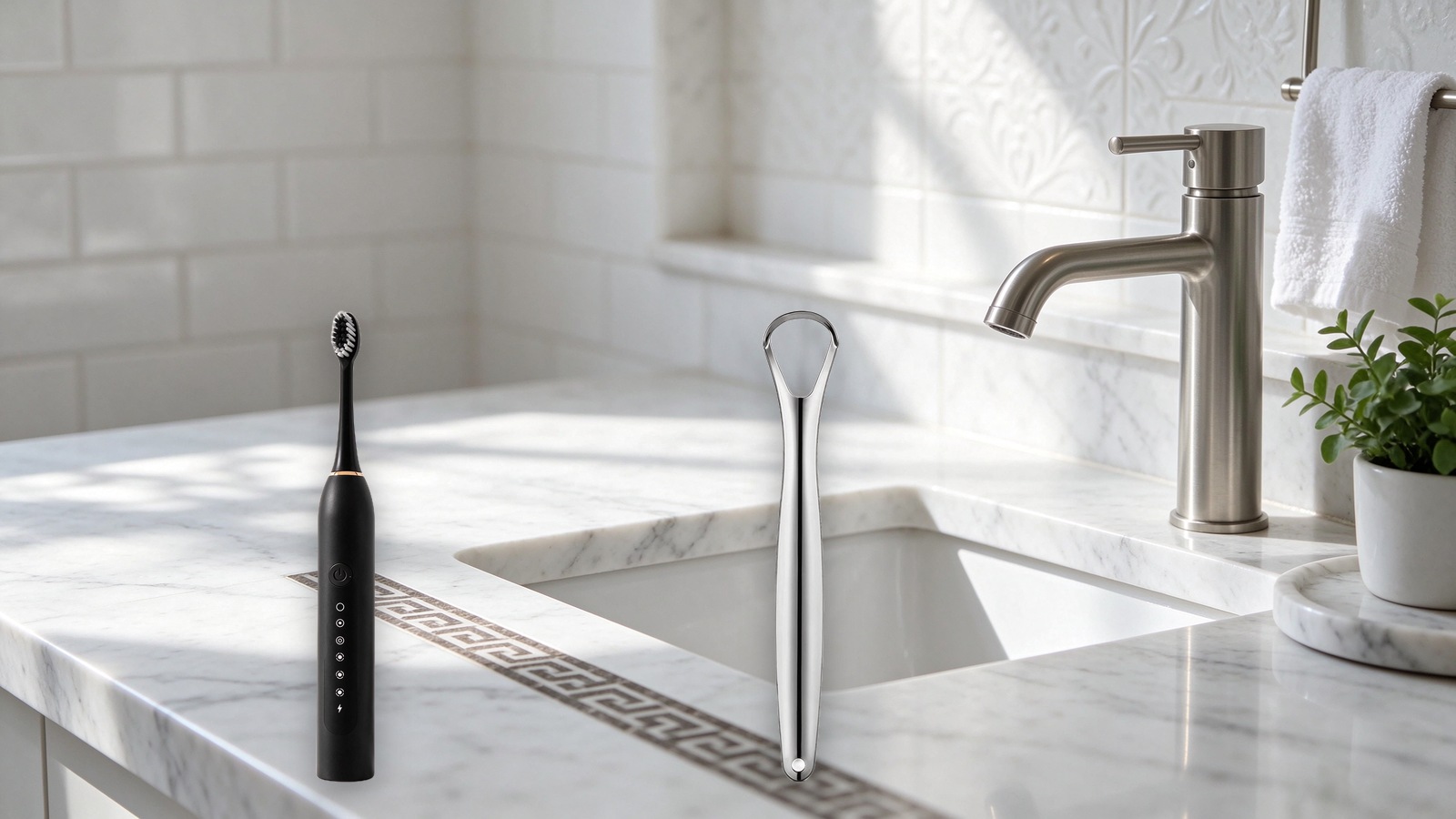
A tongue brush is a reasonable option for someone who will not add another step to the routine. It is familiar, widely available, and easy to combine with toothbrushing. It can also suit users who find a scraper uncomfortable at first, or who want a single tool for travel.
The limitation is control. Bristles can miss the center of the tongue or spread debris unless the user rinses and repeats. A brush also needs to dry completely, and the bristles eventually soften. For a retailer, a tongue brush is often an accessory to a toothbrush rather than a standalone hero product.
If the goal is a visible clean after each use, a scraper is the more convincing demo at the shelf. A buyer can see the collected coating on the blade, which makes the benefit easier to explain in a short retail or clinic conversation.
Three shapes, three user profiles
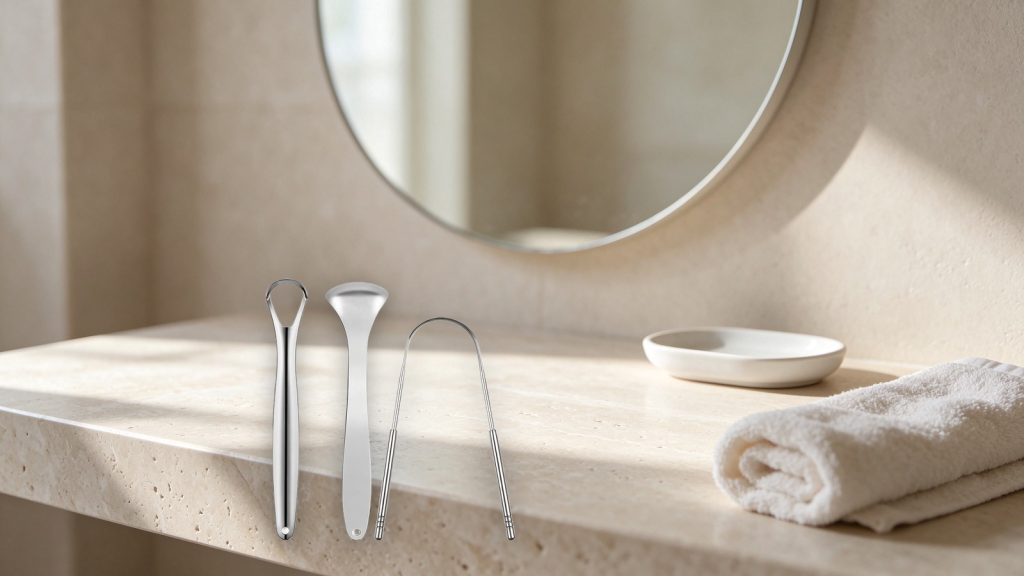
The OFOSAO stainless steel tongue cleaner set includes a U-shape, a fan-shape and a double-ended cleaner. They are not three versions of the same tool; they solve different comfort and reach problems.
- U-shape: a wide loop with a stable handle. A good first scraper for users who want a gentle, even pull.
- Fan-shape: a broad surface that covers more of the tongue in fewer passes. Useful for users who want a quicker routine.
- Double-ended: a curved handle for controlled reach. Better for users who prefer a lighter touch at the back of the tongue.
A three-piece set gives a retailer a simple story: one SKU, three profiles, and a clear reason to buy the set instead of a single tool. It also reduces the risk of a customer rejecting one shape and leaving the category entirely.
What B2B buyers should check before ordering
Tongue cleaners are a low-ticket item, so the details that decide reorder rate are usually not the headline price. Check these before placing a wholesale order:
- Material and finish: confirm the steel grade and whether edges are polished. Rough edges are the fastest route to returns.
- Shape mix: a three-shape set can cover more users, but only if the packaging explains the difference clearly.
- Handle length: compare the handle against the intended market. Too short feels unstable; too long can be awkward at the sink.
- Packaging: English retail box, barcode space, and a clean unboxing experience matter for pharmacy and gift channels.
- MOQ and tiers: confirm the first tier, carton quantity and whether mixed shapes can be packed in one set.
- After-sales: ask how the supplier handles bent tools, missing pieces and packaging damage.
For buyers building an oral-care planogram, the OFOSAO wholesale shop lists the current tongue cleaner set alongside toothbrushes, water flossers and whitening strips. The set is priced for B2B tiers, so it can sit in a clinic, pharmacy or gift assortment without a separate sourcing process.
Which should you choose?
Choose a scraper if you want a visible, controlled clean and are willing to learn the motion. Choose a tongue brush if you want the lowest-friction addition to an existing brush routine. Choose a set if you are buying for a household, a clinic or a retail shelf where different users need different profiles.
If you are comparing categories, the sonic toothbrush sourcing guide and the whitening strips buying guide cover the adjacent products in the same oral-care assortment.
FAQ
Should I use a tongue scraper before or after brushing?
Brush first, then scrape. Brushing removes plaque from the teeth; scraping then removes coating from the tongue. Rinse the scraper after each pass and rinse the mouth at the end.
Is a tongue scraper better than brushing the tongue?
A scraper gives more control and collects material instead of spreading it. A brush is more familiar and easier to add to an existing routine. Many users combine both, or use a scraper daily and a brush when traveling.
Can I use the same scraper every day?
Yes, if it is stainless steel and cleaned after each use. Rinse it under warm water, dry it fully, and store it in a clean cabinet or case. Replace it if the edge becomes rough or the handle bends.
What should retailers look for in a tongue cleaner set?
Check polished edges, a stable handle, a clear shape mix, English packaging, carton quantity and a realistic MOQ. A three-shape set is easier to merchandise than a single profile, but the packaging must explain which shape does what.
Is a tongue scraper safe for daily use?
Use light pressure and stop at the comfort limit. Do not force the tool toward the back of the tongue. If the gag reflex is strong, start with a smaller head or a U-shape and move the starting point forward.
Next step: review the three-piece stainless steel tongue cleaner set, confirm the shape mix and request a sample before setting a retail planogram.