If your breath still smells after brushing and flossing, the back of your tongue is one of the first places to check. For most people, the best tongue scraper for bad breath is a smooth stainless-steel scraper with an edge wide enough to cover the tongue and a handle that reaches the back third without triggering a gag reflex. Technique matters too: light pressure, back-to-front strokes, and a clean, dry tool.
This guide covers what the tongue has to do with bad breath, how to compare materials and shapes, and how to scrape without irritation. It is a buying guide, not a diagnosis.
Why the tongue can affect your breath
The tongue surface is covered with tiny papillae, which create crevices where bacteria, food debris, and dead cells collect. That coating can release volatile sulfur compounds, the gases most often linked to bad breath. Brushing teeth cleans enamel and gums, but a toothbrush is not shaped to sweep the broad back of the tongue. A scraper can reduce coating, but it does not treat every cause of halitosis. Cavities, gum disease, sinus problems, dry mouth, and some medications can also affect breath.
What to look for
Look at the edge, material, width, and cleaning routine before you buy.
| Feature | What to choose |
|---|---|
| Material | Polished stainless steel is durable, non-porous, and easy to rinse. Plastic is cheaper but can scratch; replace it when worn. Copper is traditional but can tarnish. |
| Edge | A smooth, rounded edge with no burrs or sharp corners. Run a finger along it before first use. |
| Width | Wide enough to cover the center of the tongue in one or two passes, but comfortable inside your mouth. |
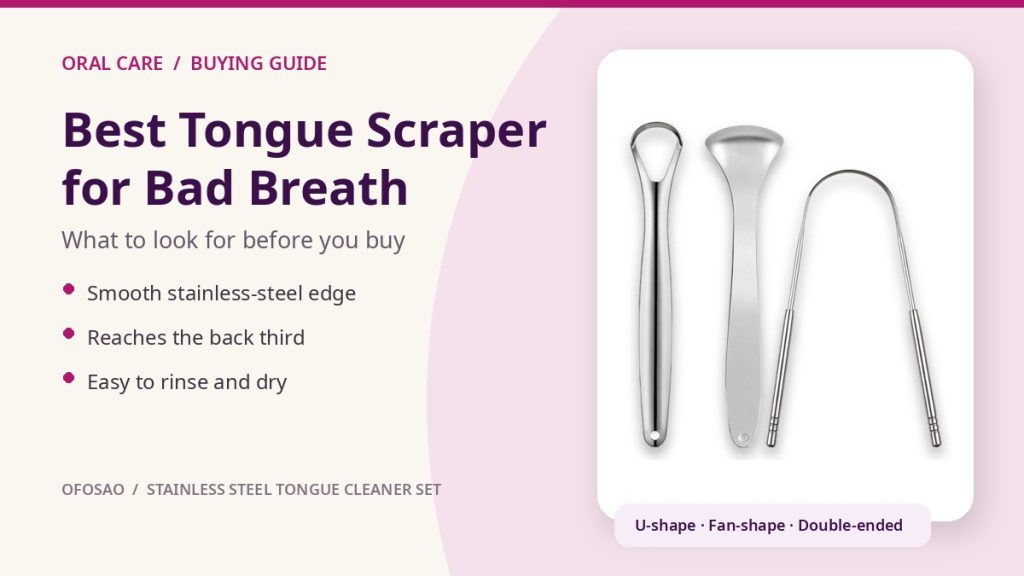
| Shape | A U-shape gives two-handed control. A fan-shape is compact. A double-ended curve reaches farther back but takes practice. |
| Cleaning | Rinse after every stroke, wash with warm water and mild soap, and air-dry. |
Stainless steel vs plastic vs copper
Stainless steel is the most practical choice for most households. It does not absorb water, is easy to clean, and holds its shape. Check the finish and weight; a smooth edge matters more than a fancy handle.
Plastic is light and inexpensive, and some people prefer a flexible feel. Repeated use can leave small scratches, which are harder to clean. Replace it when the edge looks worn.
Copper appeals to buyers who want a traditional material, but it can develop a patina and needs polishing. Do not choose it for unverified claims about killing bacteria.
Which shape works best?
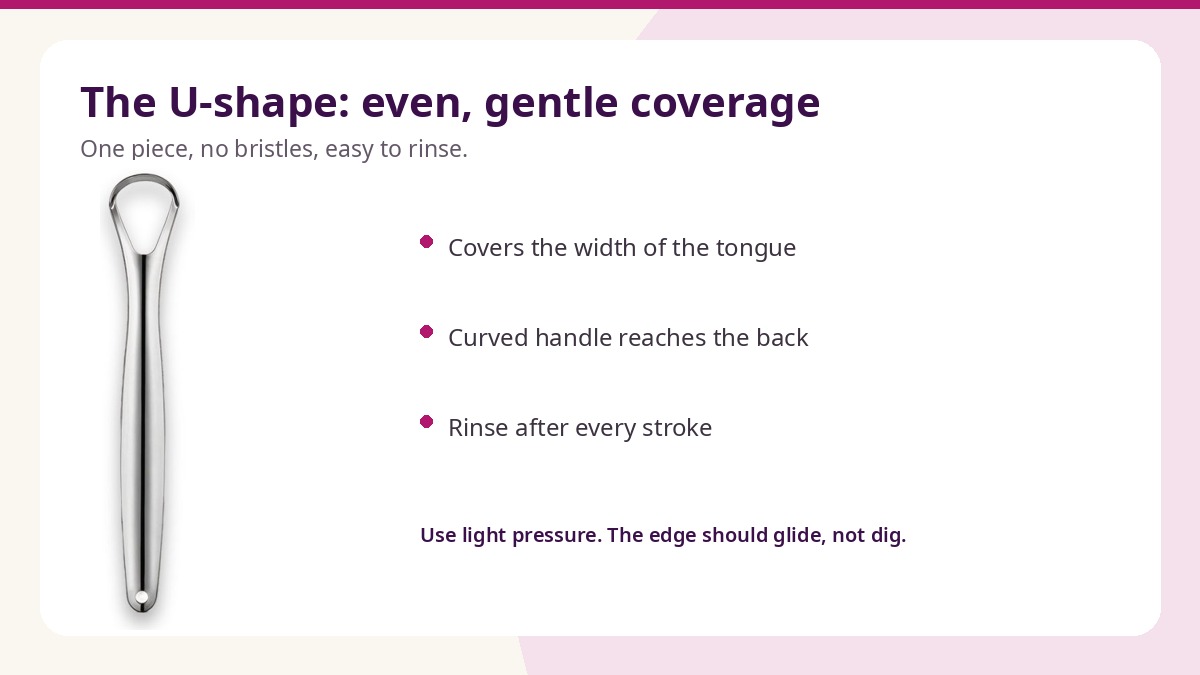
U-shape: held with both hands for even, light pressure across the tongue. Good for beginners, but takes more space.
Fan-shape: compact and easy to control with one hand. The narrower head fits smaller mouths but may need extra strokes.
Double-ended: a narrow edge and long reach for the back third. Useful, but start gently and do not force it.
There is no single best shape for every mouth. A set lets you test which one feels controlled. The OFOSAO stainless steel tongue cleaner set includes all three shapes.
How to use it for bad breath
- Brush and floss first. This avoids moving debris from the teeth onto a freshly cleaned tongue. If you prefer to scrape first, keep the order consistent.
- Extend your tongue. Use a mirror, stick your tongue out comfortably, and breathe through your nose to reduce gagging.
- Start as far back as is comfortable. If the back third is too far, begin at the middle and move back gradually over several days.
- Pull forward with light pressure. One slow stroke from back to front. The edge should glide, not dig. Do not scrape side to side.
- Rinse and repeat. Rinse the scraper after each stroke. Repeat two to four times across the center and both sides.
- Clean the tool. Rinse your mouth, wash the scraper, and dry it fully before storing.
Once a day is enough for most people. A second session at night is fine if your tongue is not sore.
Common mistakes
- Pressing too hard. More pressure does not remove more coating and can irritate the tongue.
- Only scraping the front. Work gradually toward the back third, where coating is often thickest.
- Using a worn tool. A scratched plastic edge or damaged metal edge will not clean evenly.
- Skipping cleaning. Rinse, wash, and air-dry the scraper after every use.
- Expecting a cure. A scraper can reduce coating, but it cannot fix decay, gum disease, or a medical cause.
When to see a dentist
See a dentist or hygienist if bad breath continues after a daily routine, or if you notice bleeding gums, tooth pain, sores, white patches, or a coating that keeps returning. Dry mouth, reflux, and sinus problems can also affect breath.
For wholesale buyers
Check the edge finish, material consistency, handle comfort, and packaging on every shape, not just the display sample. Buyers comparing MOQ and private label can read the stainless steel tongue cleaner wholesale guide.
FAQ
Does a tongue scraper cure bad breath?
No. It can reduce tongue coating, one contributor to bad breath, but it does not treat cavities, gum disease, sinus problems, or other causes.
Should I scrape before or after brushing?
Many people brush and floss first, then scrape, so debris is not moved onto the cleaned tongue. Consistency matters more than the exact order.
How often should I use it?
Once a day is enough for most people. A second session is fine if your tongue is not sore.
Is stainless steel better than plastic?
Stainless steel is more durable, non-porous, and easier to clean. Plastic is cheaper but can scratch; replace it when worn.
What if I gag?
Start at the middle, breathe through your nose, and move back gradually. A narrower fan-shape or double-ended scraper may feel less intrusive.
Want to compare a scraper with a toothbrush? Read tongue scraper vs tongue brush. Browse the full range in the OFOSAO shop.